The Penetration of Sealer into Coronal Third After Irradiated by Er, Cr: YSGG Laser: A confocal Microscope Study
Article Sidebar
Main Article Content
Abstract
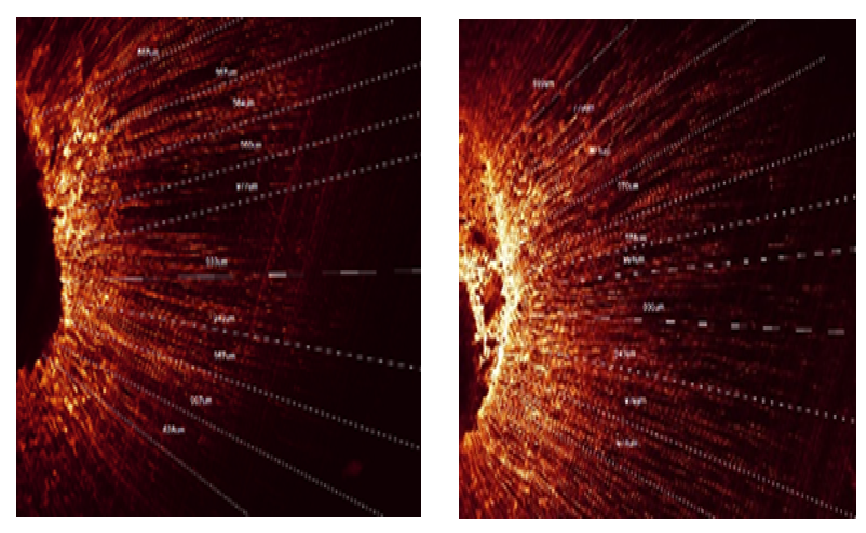
Objectives: This study aims to detect the penetration of the AH Plus sealer in the coronal third using a pulsed (Er, Cr: YSGG) laser with a short pulse duration when the SWEEPS was used to activate irrigation (Shock wave Enhanced Emission Photoacoustic Streaming). Methods: A total of 28 single-rooted mandibular premolars. The laser used is pulsed Er, Cr: YSGG assisted by the SWEEPS technique. There are four groups of samples (n = 7) for each: Group 1: Traditional syringe irrigation using 5 mL of 17% EDTA. Group 2: passive ultrasonic irrigation using mL of 17% EDTA. Group 3: Er, Cr: YSGG laser-induced SWEEPS using 5 mL of 17% EDTA. Group 4: Er, Cr: YSGG laser-induced SWEEPS using 5 mL of 5.25% NaOCl and 5mL of 17% EDTA. The laser parameters were selected according to the pilot study (Air and water 1%, 0.75 W, 5 Hz, and a short pulse duration of 60μs). The irradiated teeth were obturated by AH plus sealer mixed with Rhodamine B, and the weight percentage was 0.001. Horizontal sectioning was performed at 9mm lengths away from the apex. Four different sites (lingual, distal, mesial, and buccal) were used to determine the depth of sealer penetration. A confocal laser scanning microscope was used to detect the deepest penetration of the sealer. Statistical analysis was conducted using Dunnett t-tests with a significant level set at p≤0.05. Results: The obtained results revealed that AH plus sealer reached the wall of canals in four positions (lingual, distal, mesial, and buccal) at G4 in comparison to G3 and G2 for the selected laser parameters (Air and water 1%, 0.75 W, 5 Hz, and a short pulse duration of 60μs). The data are summarized as follows (mean ± standard deviation in μm) in G1 is 206.20±16, G2 is 593.02±131.67, G3 is 818.58±97.99, G4 is 986.94±27.9 for the lingual side. Conclusion: it is concluded that the pulse duration(60μs) of Er, Cr: YSGG laser was authorized successfully upon irrigation activation to achieve the deepest point in the root canal for four positions (lingual, distal, mesial, and buccal), so the lingual side was the best values of the sealer penetration. The best parameters are used in G4. These results suggest that the use of Er, Cr: YSGG laser with SWEEPS technique enhance the penetration of endodontic sealers into dentinal tubules thereby improving the seal quality.
Received 10 Mar. 2025; Revised 29 Jul. 2025; Accepted 3 Aug. 2025; Published online 15 Dec. 2025
Article Details
Section
How to Cite